Slab Foundation Building
When a new structure or room addition requires a ground-level foundation, we pour and permit slab foundations built for Coachella Valley soil conditions.
Learn more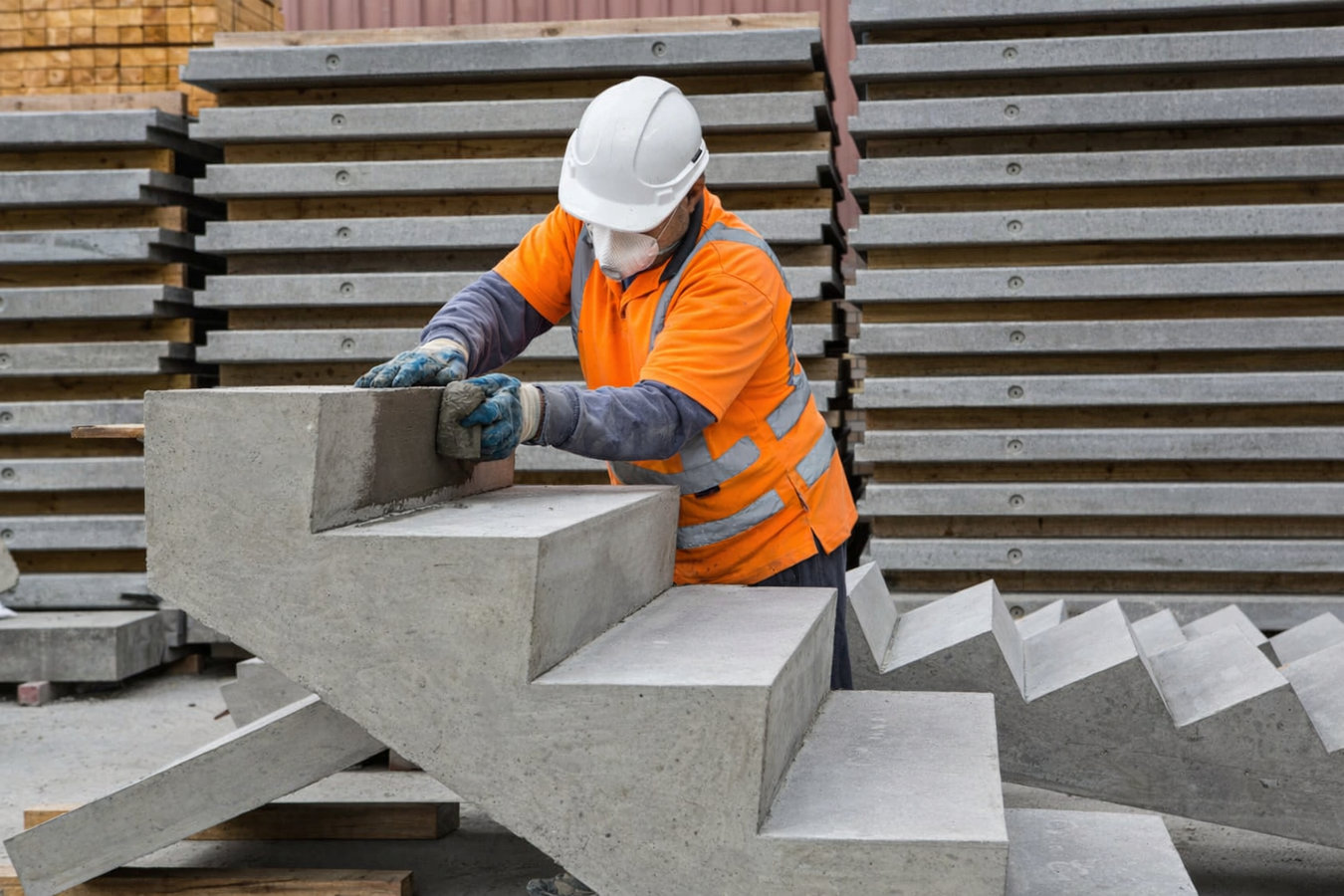
Cracked, tilted, or crumbling entry steps are a safety problem. We build new concrete steps in Indio with steel reinforcement, proper soil prep, and hot-weather pour protocols - permitted through the City of Indio.
Cracked, tilted, or crumbling entry steps are a safety problem. We build new concrete steps in Indio with steel reinforcement, proper soil prep, and hot-weather pour protocols - permitted through the City of Indio.
Concrete steps construction in Indio means demolishing old steps when needed, compacting the soil base, building a form, placing steel reinforcement, and pouring a new set of steps timed around the valley heat - most residential projects take one to two days of active work, with 24 to 48 hours before the surface can be walked on.
If your current steps rock underfoot, have visible cracks across the treads, or no longer line up flush with your door threshold, the ground underneath has moved. This is common in Indio - Coachella Valley soils shift with the seasons, and concrete steps that were not built with proper reinforcement and base preparation are the first things to show it. New steps, built correctly for desert conditions, solve the problem and give you a safe, reliable entry again.
Steps that connect a raised pool deck or back patio to the yard are often done alongside concrete retaining walls - both use the same ground preparation process, and combining them in one mobilization keeps your project on schedule and on budget.
Most of these warning signs are easy to spot on your own - no contractor needed to recognize them.
Cracks wide enough to catch your finger - especially ones that run all the way across a step - are a sign the structure underneath is under stress. In Indio, the Coachella Valley's clay-rich soils swell and shrink with rain and dry spells, which puts repeated pressure on the base of any concrete structure. Cracks that look minor tend to grow faster in this climate than they would elsewhere.
If any step moves when you put weight on it, or if the surface feels noticeably tilted compared to when the steps were new, the ground underneath has shifted. This is a safety hazard - especially for older family members or anyone carrying bags or groceries. Unstable steps that are left in place usually get worse, not better, without intervention.
When the top layer starts to chip off in pieces or the edges crumble underfoot, the concrete is deteriorating from the inside. Indio's intense UV exposure and the occasional hard monsoon rain after a long dry stretch both accelerate this process. Once the surface breaks down, patching rarely holds - the underlying material has weakened enough that a replacement is usually the more cost-effective solution.
If your front door now catches on the top step, or there is a visible gap between the step and the door threshold that was not there before, the steps have settled or shifted. This is a common result of soil movement in the Coachella Valley and is also a tripping hazard at the most-used entry to your home. Do not wait for a fall before addressing it.
Most concrete steps projects fall into one of two categories: replacing an existing set that has cracked, shifted, or failed, and building new steps for a home addition, garage conversion, or ADU. Both start the same way - removing old concrete when it is there, excavating and compacting the soil, and building a form precisely sized to the finished step dimensions. Steel reinforcing bars go in before the pour, and the surface is finished with a broom texture for traction. In Indio, we also connect steps to slab foundations when new structures require it, keeping the whole project under one contractor.
For homeowners who want something more decorative - especially those whose driveways or patios already have a stamped finish - we can carry the same pattern through to the steps. We work alongside concrete retaining wall projects when grade changes and steps are part of the same landscaping update, and we coordinate the permit applications so there is only one city inspection process to track. The California Department of Housing and Community Development sets the structural concrete standards that all permitted work must meet.
The most common project - removing old, cracked, or settled steps and building a new set that lines up correctly with the door threshold and meets current permit standards.
Steps connecting a raised pool deck, back entry, or outdoor patio to the yard - built with the same reinforcement and base prep as front entry work.
If you are adding an accessory dwelling unit, converting a garage, or building out a new room, we build steps that connect the new space to the existing grade and match your home style.
For homeowners who want steps that match a stamped driveway or patio - same structural standards, with a finish that ties the whole outdoor space together.
Indio sits at the eastern end of the Coachella Valley, where summer temperatures regularly top 110 degrees and the sun beats down on concrete surfaces year-round. That heat matters for steps construction in two specific ways. First, concrete that is poured when temperatures are high can dry too fast on the surface before the interior finishes curing - producing a step that looks finished but is weaker underneath than it should be. Second, the UV exposure over time breaks down surface coatings and sealers faster than in most other California cities. A contractor who does not account for Indio's climate is not just ignoring best practices - they are setting up a structural element to fail.
The desert soil conditions add another layer of complexity. Coachella Valley soils contain clay that expands with moisture and contracts in dry heat, putting cyclical pressure on anything concrete that sits on top of them. This is a documented regional issue, and it is one reason steps in Indio that were built without proper ground preparation crack and tilt within a few years. Homeowners in Palm Desert and Cathedral City face the same soil and heat conditions - the base-prep and hot-weather protocols we use in Indio apply across every desert community we serve.
Here is exactly what the process looks like, from the first call to using your new steps every day.
We ask how many steps you need, whether old ones need to come out, and the size of your entry. You get a written estimate within 1 business day covering labor, materials, demolition, and permit fees - no phone guesses on a structural job.
The City of Indio requires a permit for structural concrete work attached to your home. We handle the application - you do not need to visit the permit office. Processing typically takes a few business days, and we will confirm the permit is issued before scheduling the crew.
Old steps are broken up and hauled away. We excavate the area, compact the soil, and add a gravel base. This is the most important part of the job - steps that crack and shift within a few years almost always trace back to skipped base prep.
We build the forms, place steel reinforcing bars, and pour early morning to avoid Indio's peak heat. The city inspector visits to sign off on the work. You stay off the steps for 24 to 48 hours - after that, they are ready for daily use.
Free written estimate. City of Indio permits handled. No obligation until you approve the quote.
(442) 215-3038When temperatures climb above 90 degrees - common in Indio from late spring through early fall - concrete that dries too fast on the surface becomes weak and prone to cracking. We schedule pours for early morning and use additives that slow the setting process. The American Concrete Institute's guidance on hot-weather concreting is not optional in the Coachella Valley - it is standard practice on every pour we do. ACI hot-weather guidelines.
A permitted set of steps has been inspected by the city and is on record as built correctly - which matters when you sell your home or make an insurance claim. We pull every required permit and schedule the inspection ourselves. You ask for the estimate, we handle the paperwork.
We work across Indio, La Quinta, Coachella, Palm Desert, and eight other desert cities. That means we know local permit offices, HOA communities like Sun City Shadow Hills and Indian Palms, and the soil conditions that affect how steps perform across the Coachella Valley floor.
Rebar placed inside the concrete before the pour acts like a skeleton - holding the structure together if the ground shifts or a crack develops. The desert soils in this region move with the seasons, and reinforcement is not optional here. Every set of steps we build includes it.
Those four things - heat-adapted pours, permits, valley-wide local knowledge, and rebar on every pour - add up to steps that hold their shape and feel solid underfoot for years, not just for the first summer after they are built.
When a new structure or room addition requires a ground-level foundation, we pour and permit slab foundations built for Coachella Valley soil conditions.
Learn moreGrade changes that require steps often benefit from a retaining wall as well - we design and build both for a clean, integrated outdoor solution.
Learn moreModerate temperatures make spring and fall the best windows for concrete steps - contact us now for a free written estimate before the schedule tightens.